Canyon to Alpine Lillooet Hiking Guide

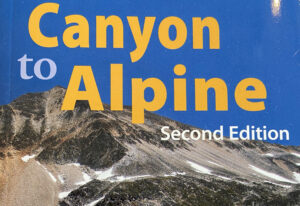
The Lillooet Hiking Guide Second Edition covers 32 day hikes, ranging from arid interior drylands of the Fraser Canyon to the high alpines. Created by the Lillooet Naturalist Society, the book contains trail and access information, route maps and topographical information, colour photos showcasing each hike, and natural history of the land.

Find it at the Lillooet Visitor Centre or email LillooetNS@gmail.com
Continue ReadingCanyon to Alpine Lillooet Hiking Guide

Seton Viewpoint

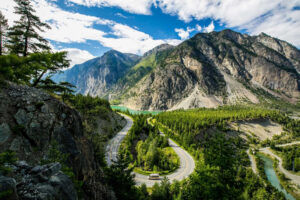
This viewpoint provides a spectacular view of the emerald-green waters of Seton Lake Reservoir and the surrounding Chilcotin mountains.

Near the viewpoint you may also find evidence of kekulis, underground winter homes built by the interior Salish-speaking St’at’imc (STAH-tleum) people. A small self-guided interpretive trail is located at the viewpoint, providing information about the history of the Lillooet area and some of its modern-day features.

Continue ReadingSeton Viewpoint

Golden Miles of History

  •   Parking: N50° 40’ 97.9’’ W121° 55’ 89.1’
    Park at Bridge of the 23 Camels.
  •   Distance: 4.5 km (2.8 miles)
  •   Time: 1 to 1.5 hours one-way
  •   Difficulty: Easy to moderate walk

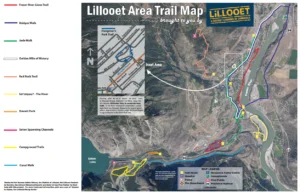
This walk highlights the many sights the Lilllooet Historical Society recommends you enjoy in a town whose post-European contact history dates back to the Cariboo Gold Rush. Pick up a “Golden Mile” brochure at the Lillooet Museum and Visitor Info Centre.

Continue ReadingGolden Miles of History

Jade Trail

British Columbia is the number one source of jade in the world today. The history of jade in Lillooet is from time immemorial.

Jade is part of the geographical history of the region and can still be found on the shores of the local rivers and in the surrounding mountains. Jade is found only in certain unique areas where two rock formations shift, thereby allowing jade to surface from its source fifteen miles deep under the earth’s crust. Lillooet is lucky to be one such rare place.

The local First Nation community used jade as a trade staple – trading north, south, and west within other Indigenous communities. Jade was used to make axes, deer scrapers, tools for daily use, and ceremonial figures.

Continue ReadingJade Trail

Xwísten Experience Tours

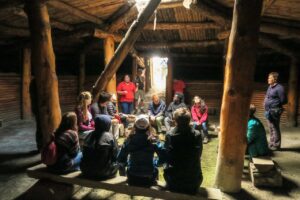
Discover one of British Columbia’s most immersive Indigenous cultural experiences. Xwísten Experience Tours offers guided pit house (S7ístken) tours, salmon drying demonstrations, and storytelling rooted in thousands of years of St’át’imc culture and land-based knowledge. Visitors learn directly from community members about traditional food harvesting, sustainable practices, and the living heritage of the Xwísten people.

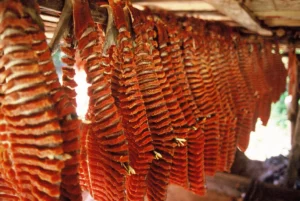
Traditional Fishing Rock & Archaeological Village Tours and The Bearfoot Grill. Visit the Bridge River Fishing Grounds, the past and current fishing area of the St’át’imc People. Learn about the traditional wind-dried method of preserving the salmon still used by its people today.

Learn more at XwistenTours.ca

Continue ReadingXwísten Experience Tours

Lillooet Museum

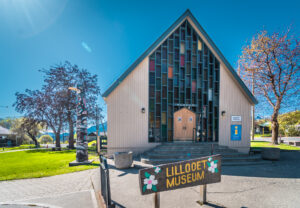
Glimpse into Lillooet’s past in the Lillooet Museum, itself housed housed in the former Anglican Church, St Mary’s the Virgin. The church was first built in 1860, from timber carried piece by piece on the backs of miners and mules over the rugged Harrison-Lillooet trail, then reconstructed in 1961 with the original chancel.

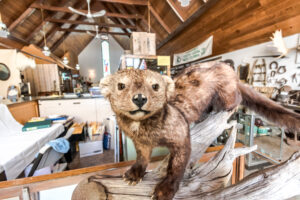
Browse through the collection of artifacts, including the original church service bell and melodeon, gold mining relics, Indigenous artifacts, machinery, memories of Lillooet’s pioneer days, the largest mounted Rocky Mountain Elk head ever registered in BC, and more. Take a peek downstairs to discover the old newspaper office of fiery and famed editor Margaret “Ma” Murray.

The Museum is situated in downtown Lillooet at St. Mary the Virgin, a former Anglican church. The original St. Mary’s, which was torn down in 1960, stood on the same spot and arrived on the backs of miners and their mules, who carried the timber, piece by piece over the rugged Harrison-Lillooet trail in 1860. The original chancel was incorporated in the new St. Mary’s and the melodeon and bell from the old church are displayed in the museum.

Continue ReadingLillooet Museum

Lillooet Community Connect HUB Store

Hours: Monday to Friday, 10AM to 5PM – Check our website for up-to-date hours as it can change seasonally.

The Lillooet HUB is a collective social enterprise that supports local artists, crafters, farmers, food producers, changemakers and small businesses.

The retail location on Main Street is the perfect place to purchase Lillooet Grown & Lillooet Made items, attend workshops and events run by Lillooet People and learn more about Lillooet and St’át’imc community initiatives and business services.

Continue ReadingLillooet Community Connect HUB Store

Ntqwixw

Written by Jane Carrico

“For every family in the country – that’s all they use…the salmon…financially, there’s no price you can put on it for you and your family”

Elder Edward Napoleon

“The St’át’imc way of life is inseparably connected to the land. Our people use different locations throughout the territory of rivers, mountains and lakes, planning our trips with the best times to hunt and fish, harvest food and gather medicines. The lessons of living on the land are a large part of the inheritance passed on from St’át’imc elders to our children. As holders of one of the richest fisheries along the Fraser River, the St’át’imc defend and control a rich resource that feeds our people throughout the winter and serves as a valued staple for trade with our neighbouring Nations. The St’át’imc can think of no better place to live.”

Nxekmenlhkálha lti tmícwa, St’át’imc Land Use Plan

“Fishing brings you back in contact with who you are… get back in touch with your identify… your roots… where you come from”

Elder Rose Whitley, 1990
Continue ReadingNtqwixw

Declaration of the Lillooet Tribe

(May 10, 1911)

To Whom It May Concern:

We the underwritten chiefs of the Lillooet tribe (being all the chiefs of said tribe) declare as follows:

We speak the truth, and we speak for our whole tribe, numbering about 1400 people at the present time.

We claim that we are the rightful owners of our tribal territory, and everything pertaining thereto.

We have always lived in our country; at no time have we ever deserted it, or left it to others.

We have retained it from the invasion of other tribes at the cost of our blood.

Our ancestors were in possession of our country centuries before the whites ever came.

It is the same as yesterday when the latter came, and like the day before when the first fur trader came.

We are aware the B.C. government claims our country, like all other Indian territories in B.C.; but we deny their right to it.

We never gave it nor sold it to them.

Continue ReadingDeclaration of the Lillooet Tribe