Written by Jane Carrico
In 1877, Irish immigrant Caspar Phair hiked the Cariboo Road from Yale to accept the position of schoolteacher in Lillooet. The same year, Cerise Armit Eyre graduated from finishing school in England and arrived to join her mother & stepfather on a farm near Pavilion Lake that is still a working cattle ranch today.
Caspar & Cerise were married in 1879 and the following year, the first of their two sons, Arthur William Armit “Artie” Phair, was born. Casper came to hold almost every official position in the area including Government Agent, Gold Commissioner, Magistrate, Chief Constable, Coroner, Fire Chief and Game Warden.
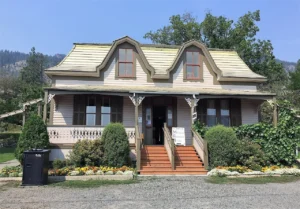
Caspar hired master builder William Duguid to build his family a fine home in the Second Empire Style featuring a mansard roof, bell-cast eaves and four unique mansard-roofed dormer windows. They named their home Longford House. In 1887, Cerise bought a general store on Main Street and the Phairs settled into a prosperous and refined lifestyle in the heart of a wild, frontier town.
By age eighteen, Artie was running the family store but the Phair family fortunes rose and fell with the boom and bust economy of Lillooet.
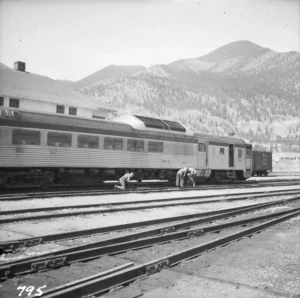
Caspar & Cerise passed three months apart in 1933. Like his father, Artie came to fill many of the town’s official positions including Coroner but scandalized the townsfolk by letting the manicured gardens of Longford House become overgrown and unkempt while he roamed the rugged mountains surrounding Lillooet taking photographs and collecting butterflies and curios. Without him, much of the area’s history would not have been recorded.
In 1944, Artie was taking pictures in Bridge River when he met Dr. Masajiro Miyazaki who was interned there with his family as the result of WWII policies that removed Japanese Canadians from the west coast. The town was without a doctor at the time so Artie drafted a petition signed by many of the town’s leading citizens that allowed them to move into Lillooet.